
Physical AI, Robotics, Cybersecurity, and Social Implications
IIS Executive Insights Cyber Expert: David Piesse, CRO, Cymar:
Click here to read David Piesse's bio:
View More Articles Like This >
“The next wave of AI is here. Robotics, powered by physical AI, will revolutionize industries.” – Jensen Huang, Nvidia [i]
DEFINITIONS
Actuator—the metal body part of a robot that enables movement
Agentic AI—intelligent software agents that interact with the robotic system
Autonomous mobile robots (AMR) —robots on wheels; driverless vehicles
Byzantine fault tolerance—blockchain-based system that removes faulty swarm robots
Caudal AI—a tail-like mechanism attached to a robot that allows stability
Causal AI—AI that explains the cause of an event and why it happened
Causal chamber—a computer-controlled laboratory that tests and validates AI, machine learning, and algorithms
Cobots—collaborative robots that work alongside humans
Edge computing—a computing framework in which devices compute at the edge of the cloud away from the internet
Embodied AI—an umbrella term used to describe the whole robotic ecosystem
Humanoid robot—a robot on legs that is like a human in appearance and actions
Generative AI—AI that creates new content by learning patterns in data
Imitation training—a method of training robots to mimic human behaviour using videos and pictures
Industrial Revolution 4.0 (4IR)—describes the industry change that has resulted from rapid technological advancements
Internet of Things (IOT)—the network of physical devices connected to the internet
Large language model (LLM)—a model created from generative AI and causal AI
Multi-factor authentication (MFA)—an authentication process that requires users to verify their identity in multiple ways
Natural language processing (NLP)—allows computers to interpret, understand, and generate human language
Original equipment manufacturer (OEM)—the original manufacturer of a device or product
Physical AI—the integration of AI into physical bodies such as robots, drones, and autonomous vehicles
Quadruped—a four-legged robotic device that is used to conduct inspections in hazardous environments
Reinforcement learning—a machine learning technique in which an agent learns to make decisions through its mistakes and successes
Robot Operating System (ROS) —a framework that provides tools to simplify building robot applications
Swarm robotics—a large group of robots that cooperate to perform tasks through decentralized control
Vision-language-action (VLA) model—integrates robotic vision, language, and actions
OVERVIEW
The word “robot” is derived from the Czech word “robota,”[ii] which means servitude and drudge work.
Robots have long fascinated the world both in fact and fiction, but due to recent technological developments, especially artificial intelligence (AI), they now play a central role in many business sectors. This changes how work is performed, as robots and humans collaborate to perform tasks more efficiently. The upside of this change is improved efficiency and safety in the workplace, as well as the creation of new jobs for sustainability. The downside is increased cybersecurity risk and the potential for job loss due to increased automation.
As robots become more intelligent, they will work more independently alongside humans, transforming from autonomous mobile units into functional, soft-material humanoid robots with advanced sensory perception and dexterity. This transformation to spatial understanding is enabled by physical AI, which involves the integration of AI into the physical world via robotics, drones, autonomous vehicles, and IOT devices, turning data into action. Swarm robots (multiple low-cost robots that work together on a decentralized basis), for example, will be utilised to work in challenging and dangerous environments.
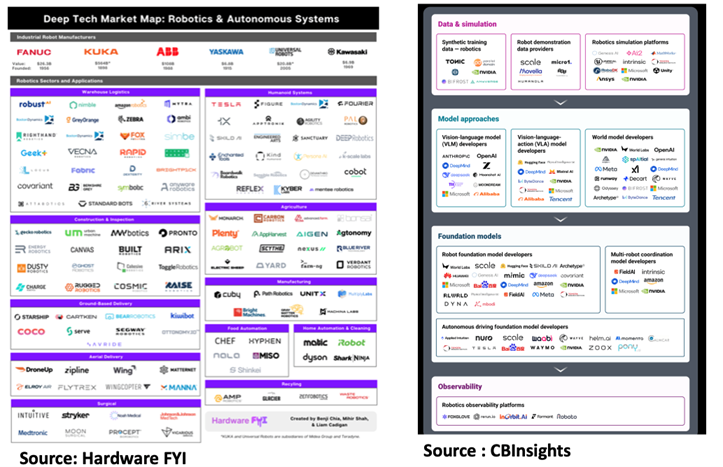
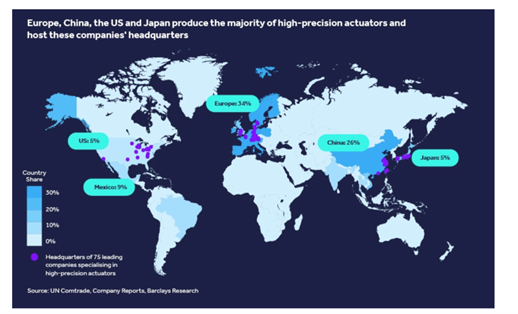
The impact of robotics is global, with many countries, particularly China and the United States, shaping its future. Many workplaces will accept the use of robots due to the benefits they offer. Consider the diagrams below, which show the various hardware manufacturers and modelling companies involved in robotics.
Hanson Robotics activated Sophia, a social humanoid robot, in 2016. This advancement led to the optimization, upgrading, and mass production testing of other humanoid robots.[iii]
Exponential technologies catalyse each other, and robotics was the major catalyst in 2025. This is called convergence network strength, which grew 35 percent last year, as shown in the diagram below.
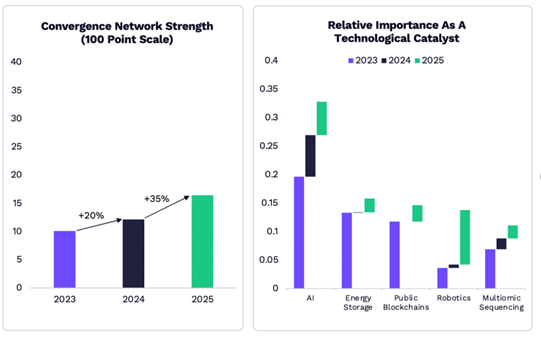
Source: Ark Investments
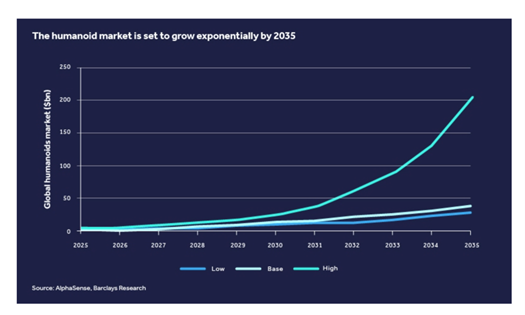
Humanoid robots are expected to become the next wave of product innovation, having the ability to transform human lifestyles and reshape the global industrial landscape. The timeline below from Goldman Sachs[iv] shows the potential growth of humanoid robots across industries and households.
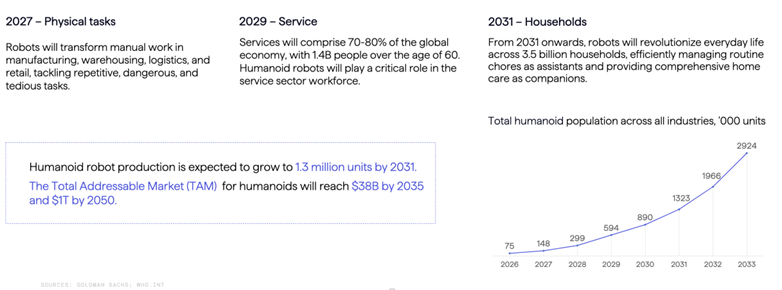
Source: Goldman Sachs (adaption by Humanoid.ai)[v]
China arguably leads the AI race in models and applications. However, if China’s access to technology by the company NVIDIA is restricted due to sovereign AI geopolitics, it may move down the stack to smart chip development.
As we move from bits to atoms with quantum computing, AI will be immersed in the physical world. It’s already the flywheel to autonomous transport, and the United Arab Emirates’ plan to release flying taxis this year[vi] will transform cities. AI, blockchain, and robotics in conjunction with humans and legacy information changes how any product is bought or sold.
Technology’s progress has given robots computer vision; sensors for capturing information on touch, temperature, sound, and light; new battery options for energy; and actuators for movement. This spatial computing navigates three-dimensional environments. Robots train through imitation learning that involves trial and error and through reinforcement learning with rewards and penalties. Learning can be nurtured in simulated environments or in the physical world, using continuous learning loops that feed real-world data back into the training models.
Advanced manufacturing now supports the production of robotics and physical AI systems at enterprise scale. Their production quality, therefore, is similar to other smart devices, making them practical for industrial use. While open-source development and component commoditization reduce entry costs for physical AI systems, the robots will need advanced AI processors and chips, making them more costly than rigid industrial robots. Robots-as-a-service pricing can be applied for low-risk, scalable automation, or a capital expenditure (CapEx) purchase agreement can be used for robust repetitive operations.
It’s important to look at how robotics and AI have evolved, as their integration is what has brought the world to the current inflection point.
THE TURING MACHINE
The journey to robotic development started with the Turing Machine,[vii] a general-purpose, hypothetical computer conceptualized by Alan Turing that is now considered by many to be the beginning of modern computer science. For AI, the Turing Machine forms the basis for understanding computational processes and problem-solving methodologies. Its role in AI encompasses the emulation of human thought processes and the execution of complex computational tasks, making it an important contribution in the development of intelligent systems.
The early development of robotics laid the foundation for physical AI. Industrial robots, first introduced in the mid-20th century, were initially designed for repetitive tasks on assembly lines. These robots were efficient but lacked intelligence to adapt to new tasks or environments. The integration of robotics and AI ushered in a new era of autonomy.
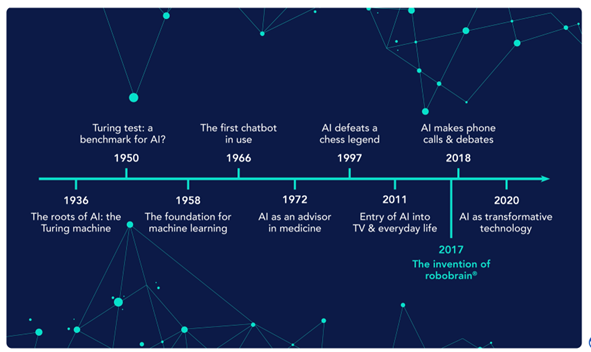
Source:Robominds[viii]
As the chart shows, AI has been around for a long time, but generative AI didn’t enter the timeline in mass until late 2022. The mathematical principles of causal AI have existed for decades, back to around the time of space research in 1967 when expert systems emerged after the advent of machine learning, but it gained traction in 2018. Agentic AI emerged in 2023 and physical AI in 2024, and they are now fostering the launch of the robotic, drone, and autonomous era out of the labs into production. So now a combination of multiple AI subsystems contribute to physical AI.
WHAT IS PHYSICAL AI?
Physical AI represents embodied AI,[ix] forming a brain-body link. Integrating AI with physical bodies, such as robots or drones, enables them to perceive, reason, and act within the real world. Unlike generative AI, which processes abstract data, physical AI operates in physical environments using sensors, actuators (the body), and AI-powered software (the brain) to handle real-world physics.
Earlier AI systems operated solely in digital environments, but physical AI systems integrate sensory input, spatial understanding, and decision-making capabilities. The systems are trained to master principles like gravity and friction in simulated environments before being deployed in the real world.
Robots are just one subset of physical AI science, which includes IOT devices, drones, autonomous vehicles, and sensors. Physical AI is optimizing operations in factories, warehouses, and ports through digital twin simulations that enable virtual testing of physical systems. While early industrial robots followed instructions, physical AI systems perceive their environment, learn, and adapt to changes based on real-time data.
As technologies converge, physical AI has gone mainstream:[x]
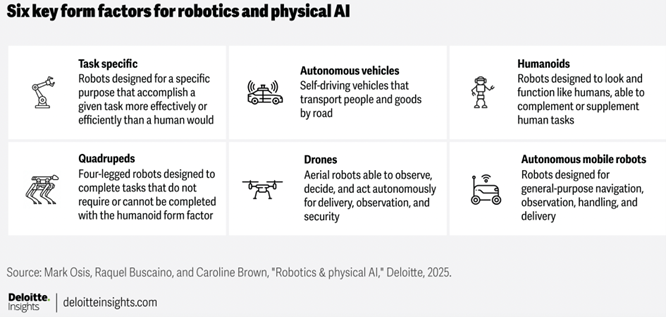
Scaling physical AI has technical, operational, and regulatory challenges that will drive the next wave of robotics. Simulation environments offer the advantages of speed, safety, and scalability, but approximation creates a gap with the real world. What a robot learns in a simulated environment doesn’t always translate to the dynamic physical space. Overexperimenting in the real world will cause failure, hence the need for causal AI business outcome improvement.
Physical AI moves the whole operation and decision-making ecosystem to the jobsite by merging real-time perception through cameras and sensors with edge server computing and device integration. Edge robotics brings robots closer to IoT data sources like smart meters without needing to offload data to a cloud server in a data centre. This removes a robot’s dependence on internet stability, which can be beneficial when instant decisions are needed, such as in the case of autonomous vehicle braking.
Safety monitoring and alert functions can continue without internet connectivity interruptions, and data never leaves the premises, aligning with global privacy frameworks and industry-specific compliance standards. IOT feeds real-time data into the edge servers. Computer vision, NLP, and motor control form a brain-like function known as a VLA model, which helps robots interpret their environment onsite.
Physical AI systems run large language models (LLMs) and VLA models simultaneously, processing high-speed sensor data to make safety-critical decisions without cloud or internet dependency. This capability is essential for autonomous vehicles, industrial robotics, and remote surgery. It also enables swarms of robots working together to share knowledge across intelligent networks.
Physical AI and caudal AI represent two intersecting drivers in robotics AI: They capture knowledge in the physical world and improve locomotion. Caudal AI refers to the AI-driven control of tail structures in robots that are intended to improve balance, stability, and navigation. Robot fish,[i] for example, which are used in deep sea trenches to help find solutions for climate change, can control their tail for movement. .
According to the International Federation of Robotics (IFR),[ii] these are the top five physical AI trends:
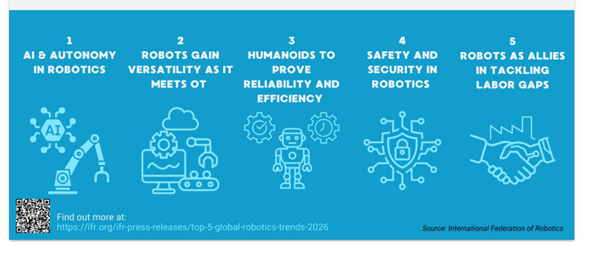
Robots that use AI to work independently utilise multiple types of AI:
- Analytical (causal) AI processes large datasets, detects patterns, and performs predictive maintenance.
- Generative AI LLMs collect data, create outputs, and enable robots to learn new tasks autonomously and generate training data.
LLM + human knowledge + causal AI give robots agentic AI capabilities to work autonomously. This dovetails information technology (IT) and operational technology (OT)—foundational elements of the Fourth Industrial Revolution (4IR).
Most robots used in production settings have wheels, but humanoid robots are becoming more mainstream. Humanoid robots that collaborate with humans are called cobots. Pioneered by the automotive, warehousing, manufacturing, and healthcare industries, humanoids can fill labour gaps, but they must meet industrial requirements for speed, safety, energy consumption, and maintenance costs.
The rapid expansion of robotics systems into cloud-connected and AI-driven environments exposes them to multiple cybersecurity threats. These include hacking attempts targeting robot controllers and cloud platforms to gain unauthorized access and steal sensitive data. Deep learning models can create black boxes that are difficult to explain. It’s therefore important to endow the other branches of AI with causal AI, which can provide explainability to gain regulatory acceptance and end-user trust.
HUMANOID ROBOTS
Industrial and commercial robots are made from metal gears, motors, and actuators that are produced globally. While they give robots mobility, these parts are rigid, unstable, and prone to breaking down.
Today’s soft robots are designed to be flexible and to safely work with humans. They are made of fabric, silicone, and elastomers that allow bending and other flexible movements. Because they work closely with humans, these cobots must learn emotions, language, and behaviour, which requires advancing behaviour-recognition technologies. In addition, companies must focus on developing solid-state batteries that can safely power robots for long periods of time.
Data used for training humanoids can be altered, causing them to malfunction. Data that the robots collect, including sensitive user data, can be hacked into and used for malicious purposes. Therefore, it’s important that the owner of robot data (i.e., the end user, robot manufacturer, or software provider) is clarified.
ROBOTICS AND CAUSAL AI
Causal AI embraces computational linguistics[xiii]—the calculus of language and philosophy. While LLMs are powerful, they are limited by linear regression, do not understand the physical world, lack persistent memory, and cannot reason over long horizons and time series.
Causal AI goes beyond statistical correlation to identify cause-and-effect, improving decision-making, robustness, and explainability by understanding why outcomes occur, which is necessary for physical AI to function. Robots are safer when they understand the consequences of their physical actions. In essence, physical AI enables robots to move, but causal AI enables them to understand why they should move and the effects of that movement.
AI often lacks suitable real-world datasets, and scientists use simulated data, which limits information about how a scientific hypothesis can be applied to real problems. Causal chambers[xiv] are emerging as a sandbox mechanism for computer-controlled laboratories in which an array of variables from physical systems can be modelled or measured. Interventions can then be performed and the causal model can be validated as a component part of a robot.
Each chamber is a robot component (or sensor) that contains a simple physical system that can measure and manipulate the variables and look for confounders (misleading variables). The physical system robot actuators interact with the chambers, thus providing real-world data without relying on computer simulations. This encourages causal learning to identify causal relationships across thousands of variables. Results include linear and nonlinear simulations where the ground truth is known and can be directly back tested.
Deep learning and machine learning can be used to learn causal networks at scale, leading to causal discovery to identify cause-effect mechanisms for better scientific understanding, explainable decision-making, index creation, and more accuracy using observational, interventional, and time-series data. This is a controlled bridging of simulated and real worlds to address the approximation issue when testing robots.
THE ROBOTIC LANDSCAPE
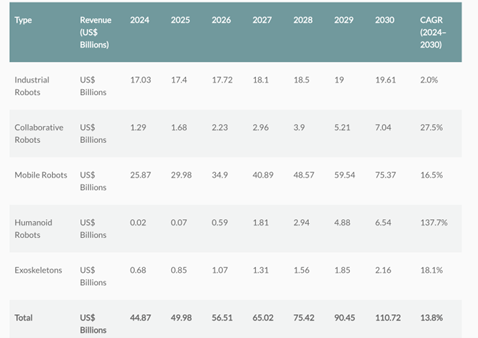
Thirteen million robots will be in circulation by 2030, according to ABI Research.[xv] Purchase orders increase as businesses address labour shortages and improve efficiency. Robots can offer opportunities for the entire ecosystem (connectivity providers, computing platforms, AI software vendors, software integrators), not just robotics OEMs.
Source: ABI Research
Mobile robots dominate hardware and software sales, generating 50 to 60 percent of total revenue[xvi] over industrial and other robots. Physical AI and closed-loop automation are enhancing cobot collaborative capabilities. Humanoid robots are the fastest-growing segment based on investment growth activity. Exoskeleton robots are used by industrial companies to augment safety by alleviating worker physical strain and by healthcare providers for rehabilitation.
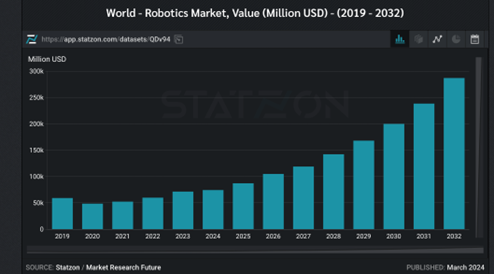
The global robotics market was valued at $51.51 billion in 2025, and it’s projected to hit $199.5 billion by 2035 based on a compound annual growth rate of 14.5 percent from 2026 to 2035.[xvii] The global operational stock of industrial robots was 4.7 million units, marking a 9 percent year-over-year increase.[xviii] Much of the robotic manufacturing growth is in Asia-Pacific, with China accounting for 54 percent of the supply.[xix]
Hardware remains the dominant revenue generator in the robotics market, capturing over 44.7 percent of the market, but the value chain has shifted from actuators to advanced AI compute software. Robotics software will generate $24.5 billion in revenue by 2030.[xx]
Industrial robots dominate automation in manufacturing by controlling over 35.5 percent of market share,[xxi] with South Korea leading in usage. Industrial applications have over 45 percent share of the robotics market.[xxii] Hardware has the highest value in the supply chain due to the dependency on torque-transmitting joints and advanced machine vision systems.
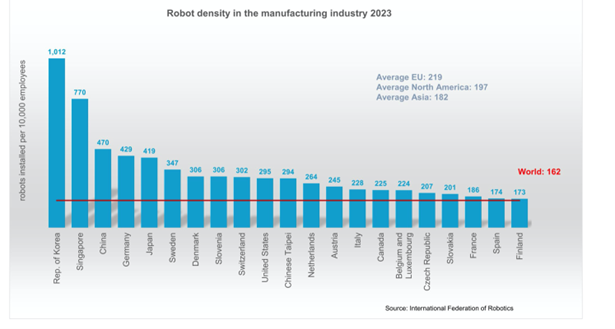
The regional giant is China because of automation of a large manufacturing sector, accounting for 42 percent of industrial robot sales worldwide.[xxiii] North America and developing economies are seeing increased market shares, while European robotics adoption is flat.
Robotic growth in China is driven by an AI market that was valued at $28.18 billion in 2025 and is expected to grow to $202 billion by 2032, with a compound annual growth rate of 32.5 percent.[xxiv] The Chinese humanoid robot market size is expected to reach $357.2 billion by 2035, with a compound annual growth rate of 42 percent.[xxv]
Humanoid robots account for 18 percent of the global robot market share.[xxvi] The global market produces high-computing intelligent chips, embodied AI, machine vision, autonomous driving technologies, IOT devices, drones, and medical devices. Leading manufacturers are providing the whole robotic body—brain, dexterous hands, leg joints, reducers, torque force sensors, screws—that can be applied to causal chambers.
The performance of Chinese and American AI models is close. The most recent Artificial Intelligence Index Report,[xxvii] published by the Stanford University Institute for Artificial Intelligence in April 2025, reported that the performance gap between the two countries’ AI models has dramatically narrowed from 17.5 percent in 2023 to 0.3 percent today. The U.S. has historically dominated AI research and model development, with China ranking second.
Global investment in AI reached $252.3 billion in 2024, with private investment growing by 44.5 percent.[xxviii] Meanwhile, the U.S. continues to expand its global lead in private AI investment. In 2024, U.S. private AI investment grew to $109.1 billion, almost 12 times China's $9.3 billion. China, however, is focused on making the country the premier AI innovation hub through its New Generation Artificial Intelligence Development Plan.[xxix]
ROBOTICS AND INSURANCE
"Humanoid robot insurance is not just a risk-transfer tool. It is a 'catalyst' for industrial innovation and a 'stabilizer' for widespread adoption.”[xxx]
Commercial insurers offer specialized insurance for robots, including humanoid robots and autonomous systems, in Chinese and Western markets. In parallel, insurers are developing standalone AI policies to cover specific risks, such as model failure or data poisoning, across the cyber and professional liability lines moving away from traditional policies. To obtain and maintain coverage, clients must demonstrate robust AI governance, such as bias audits, human-in-the-loop access, and data integrity. Multiple parties are involved in autonomous AI systems, so situational awareness of key data items that can cause harm allows forensic mechanisms to attribute liability for subrogation purposes.
The AI insurance market is forecasted to grow to $58.5 billion by 2030, with a compound annual growth rate of 32.16 percent.[xxxi]While traditional AI (machine learning and LLMs) handles data-intensive, back-office tasks, physical AI enables real-time, autonomous risk mitigation in areas like manufacturing, logistics, and property, directly affecting dynamic premium modelling. Physical AI can monitor environments continuously and send real-time alerts when a hazardous condition occurs, reducing risk at an exponential rate. Drones and computer vision can analyse damage in seconds. Robots are redefining liability for employees and commercial insurance.
By reducing workplace incidents, physical AI enables companies to lower insurance premiums and operational downtime. The rise of humanoids and autonomous machines shifts insurance toward products liability. A lack of historical loss data makes it difficult to price premiums for highly autonomous AI technologies, leading to industry benchmarks from cyber history.
Current solutions developed for cloud-based AI don’t meet the needs of working environments that function instantly, reliably, and independently of external connectivity. Underwriters generally support a human in the loop for critical AI decisions, hence the need for causal AI in policies. If AI is fully autonomous, insurers consider products liability coverage. Very large companies developing advanced AI often self-insure via large balance sheets or captive companies.
Some AI risks could be so systemic, affecting many companies simultaneously, that they challenge insurability and require a government backstop akin to a natural catastrophe or terrorism event. Public-private solutions could emerge for the extreme tail risks, ensuring coverage remains available. This is an evolving area.
OEM warranties for robots guarantee functionality, protect against premature component failure, and cover manufacturing defects for a specified period, with options to extend the warranty. Embedded insurance for OEM robots integrates insurance coverage directly into the purchase, lease, or service contract for the robots., It covers risks like mechanical failure, including battery failure; operational downtime when the robot is crucial to production; protection against data breaches, system hacks, and ransomware attacks; and liability for bodily injury or property damage caused by robot malfunctions.
IoT sensors can analyse real-time robot data, so insurers can tailor premiums based on actual usage, similar to auto insurance telematics. Embedded solutions often feature digitalized, fast-tracked parametric claims processes for item repair or replacement.
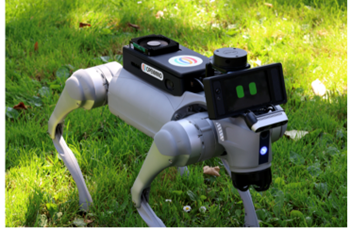
Insurers also use quadruped robotic claims dogs, such as Boston Dynamics’ "Spot,"[xxxii] to enhance safety, improve efficiency, and speed up data collection. These autonomous robots can safely assess damage in hazardous environments that are dangerous for humans. Equipped with 360-degree cameras, thermal imaging, and LiDAR, quadrupeds can provide detailed visual documentation of property damage or other scenarios. They can also perform 24/7 patrols to detect early heat anomalies, leaks, or structural issues.
Source: Open Mind[xxxiii]
Numerous insurance companies now offer physical AI robot insurance. Policies often include both physical damage and third-party liability coverage. Equipment may be covered if damage results from natural disasters, fire, or explosion; accidental collision; overturning and falling; electrical failures; cybersecurity incidents; and abnormal operations. In China, coverage is often extended to the whole chain of production, sales, leasing, and usage. Pricing is a challenge because there is a lack of critical information, such as accident frequency, loss distribution, and repair cost schedules, but as data-sharing platforms and dynamic pricing mechanisms evolve, the insurance market will expand rapidly.
ROBOTICS FOR CARGO AT AIRPORTS, SEAPORTS, AND WAREHOUSES
From AI-driven robotics to autonomous mobile solutions, warehouse automation is reshaping logistics operations. Robots can navigate complex warehouse layouts with minimal human input, learning from their environment to optimise path selection and adapting in real time to inventory changes and order volumes.
Warehouse automation relies heavily on autonomous mobile robots (AMRs) for material handling.[xxxiv] AMRs use sensors and AI to dynamically plan routes, avoid obstacles, and work collaboratively with human workers. They account for over 60 percent of new automation deployments in distribution centres.
Data fuels warehouse automation. IoT provides real-time insights into warehouse operations via cloud-based systems and data analytics. Rather than replacing human workers, cobot automation tools are augmenting their capabilities. For warehouses facing labour shortages and high turnover, the collaborative model ensures operational continuity and reduces carbon footprints.
The deployment of robots in airports and seaports embodies a practical endorsement for physical AI. After controlled simulations are performed, robots are deployed, but the reinforcement learning flywheel is a must. Unlike warehouse robots that follow scripted rules, airport and seaport cargo robots must think beyond logistics, as time is of the essence when transporting, loading, and unloading containers in the dynamic cargo hub landscape. Real-world deployment highlights issues not captured in simulation environments, which are then fed back into training models and digital twin simulations. Open source is used wherever possible.
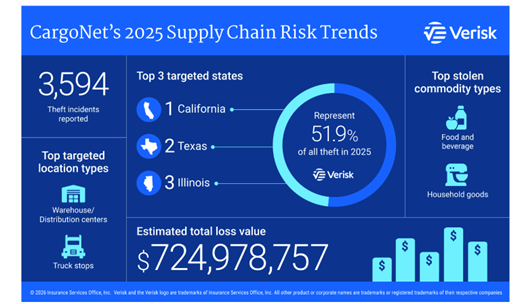
As the global economy continues to navigate geopolitics, tariff fluctuations, and labour shortages, supply chain security is at a critical inflection point. From automotive components to medical devices, cargo in transit or in storage is increasingly exposed to theft, tampering, and operational disruptions. In response, a new wave of security innovation is emerging with autonomous robots and AI. These technologies are redefining physical security at ports, distribution centres, and warehouses—providing dynamic, data-driven, and scalable solutions to protect high-value cargo as cargo theft rises each year, with massive losses identified in the U.S. alone.[xxxv]
Source: Cargonet
These challenges are compounded by labour shortages. The annual turnover rate for security guards ranges from 100 to 300 percent annually.[xxxvi] Security demands more than fixed cameras and checkpoint guards. Security robotics platforms, such as ground-based patrol robots and aerial drones, now operate 24/7 to conduct perimeter sweeps, monitor critical zones, and respond to alarms autonomously. These systems integrate seamlessly with AI-powered analytics, enabling real-time anomaly detection and predictive insights. Combined with centralized Robotic Security Operations Centres (RSOCs), they enable remote oversight, incident escalation, and coordinated response across sites.
ROBOTICS AND HEALTHCARE
By 2030, the global healthcare system is expected to face a shortage of 10 million workers.[xxxvii] The number of ophthalmologists in the U.S. alone is projected to decrease by 12 percent by 2035.[xxxviii] Aging populations, chronic diseases, and the need for surgical care is outpacing medical training. Medical robotics can help address this imbalance. Elder care robots, for example, can assist patients with walking, helping reduce falls.
In 2025, robotics funding was $8.5 billion,[xxxix] much of which was allocated to robotic surgery. The global market for dexterous humanoid robot hands, which imitate human hands, will be about $10.3 billion in 2030, with a compound annual growth rate of about 40 percent.[xl]
Venture capitalists and industry players have taken an investment interest in robotics for healthcare. The healthcare industry is focused on enhancing patient care and reducing workforce burden, while investors are interested in driving large-scale societal impacts. One example is organ-on-a-chip technology,[xli] where AI is used in drug research instead of animals. With this technology, pharmaceutical companies can improve drug research and development while saving animal lives.
Da Vinci robotic surgical systems have been used by surgeons for years.[xlii] But surgical robotics technology may soon benefit an even broader range of patients by treating cancer and human eyes. Physical robots will turn operating theatres into edge-based, data-centric ecosystems. Data is the critical component underpinning how robotic systems learn and adapt, so the quality of training datasets is key.
Haptic systems allow robots to "feel" remote objects. For example, kinaesthetic feedback allows the user to feel resistance when the robot manipulates, grasps, or touches objects during robotic surgery. Robotic skin can emulate human tactile perception, while machine learning algorithms interpret complex haptic data collected through devices such as gloves.
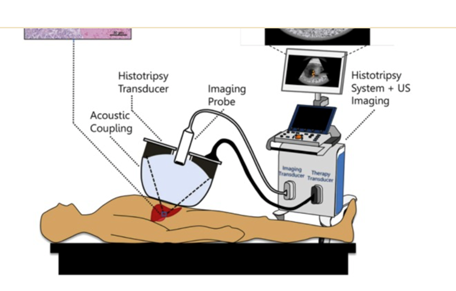
The histotripsy robotic arm[xliii] is a noninvasive, image-guided system that directs sound waves on cancer tumours to destroy them. The robot precisely liquefies target tissue while sparing surrounding healthy structures.
Source: Journal of Gastrointestinal Surgery[xliv]
SWARM ROBOTS
Swarm robotics[xlv] involves multiple robots working to achieve a task through decentralized control, local communication, and self-organization. Each blockchain-based robot operates autonomously based on interactions with nearby robots. They can be used in search and rescue missions, environmental monitoring, and for agriculture purposes.
Swarm robots use physical AI sensors, such as cameras or proximity detectors, to perceive their surroundings. They then exchange limited information with neighbour robots via wireless links or short-range methods. A swarm uses a variety of algorithms to collectively determine a direction or task. For example, a swarm of drones could collaboratively map a disaster area by sharing data.
A damaged robot in a swarm can be ignored by the others, so the swarm adapts without human intervention. The presence of Byzantine robots with faulty or malicious behaviour, however, can cause a swarm to fail. Blockchain technology that is Byzantine fault tolerant can identify fraudulent robots and remove them.
ROBOTAXIS
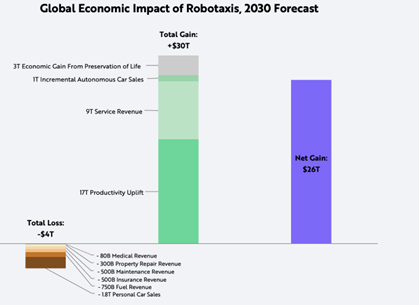
Robotaxis are autonomous, driverless vehicles that offer on-demand ride-hailing services via apps. Led by Waymo,[xlvi] Baidu,[xlvii] and Tesla,[xlviii] they provide safe, affordable, urban mobility, with significant commercial operations in the U.S. and China.
Robotaxis use advanced sensors, including LiDAR, cameras, and AI, via edge computing, to navigate and operate independently in urban environments. They promise reduced traffic congestion, lower emissions through electric vehicle use, and lower costs for passengers. The robotaxi market is rapidly growing and projected to exceed $180 billion by 2034, with expansion into more cities worldwide.[xlix]
Source: ARK Investments
SOCIAL IMPLICATIONS OF ROBOTICS
Physical AI raises key ethical and societal concerns. While some jobs may be lost due to automation, others will be created, and some people will need to learn new skills.
As AI becomes pervasive, the way humans interact with machines must change. Physical AI can make things more accessible, and it offers massive benefits in the healthcare and logistic sectors. However, governments will need to address the issue of job displacement.
Universal basic income (UBI)[l] has been proposed as a long-term safety net to widespread job displacement caused by advanced robotics and AI. UBI could be funded by "robot taxes,"[li] which would be paid by companies that replace human workers with automation.
AI-driven robots are replacing human jobs in manufacturing and services, as well as some white-collar positions. Subject matter experts may be able to share their knowledge of causal AI systems and receive royalties, which could formulate a change to private pensions.
At the extreme, if robots do all the work, people need a source of income to buy products and keep the world economy afloat. With such a drastic change, the big winners would be the technology companies supplying the components fuelling the change. This imbalance would need to be addressed. One possibility could be redistributing some of the wealth generated from the increased productivity that results from AI usage. For example, it could be used to help fund a UBI program.
According to the Stanford Basic Income Lab, many pilot studies on UBI have been conducted over the past 40 years.[lii] They concluded that UBI generally yields positive effects in terms of alleviating poverty and improving health and education outcomes, but it has not fully addressed the impact on employment. UBI is not intended to be an unconditional universal handout, and it needs to be means tested so beneficiaries prove eligibility.
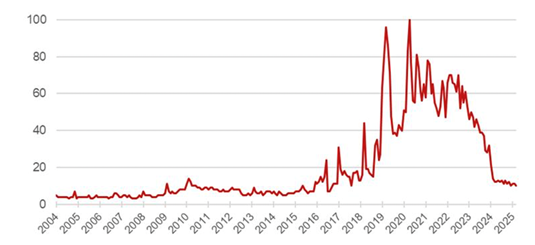
Source: Google Trends – Interest of UBI over time
The graph shows that interest in UBI increases based on economic forces, such as immediately after the 2008 financial crisis and during the COVID-19 pandemic. With the fast adoption of humanoid robots in 2026, interest may increase again.
While other tax alternatives have been proposed to fund UBI, robot taxation may be the most appealing, as the economic benefits companies realize from automation would directly support those most affected by its implementation. It also moderates the pace of automation, addressing the issue at its source, and could support funding for education and training so that those displaced can re-enter the workforce.
Physical AI automation demands a social contract where technological progress and human welfare advance together. UBI funding must be sustainable and aligned with the changing nature of the economy. It must also be evidence-based, shifting the tax burden from labour to capital. Sovereign AI strategies could include governments owning shares in automated hyperscaler companies and distributing the dividends to their citizens, coupled with training programs that equip workers with skills that complement AI rather than compete with it.
ROBOTICS AND CYBERSECURITY
The integration of AI into robotics introduces new challenges, as adversaries can exploit AI systems through manipulated inputs that result in robots taking harmful actions. Addressing these vulnerabilities requires security assessments during the design and manufacturing of an AI system, risk mitigation, and continuous monitoring to ensure operational integrity.
Real-life incidents have driven the need for robust robotic cybersecurity measures. Robotic systems involve sensors, actuators, and autonomous control mechanisms, characterized by adaptability and interaction with the real world. Automated systems can follow predefined sequences without dynamic decision-making capabilities. Consider these incidents: An industrial robot killed a worker at a car plant;[liii] a faulty robot crushed a worker;[liv] a welding robot killed an employee;[lv] a chess robot fractured a player’s finger;[lvi] a worker was struck by a robotic arm;[lvii] and a security robot ran over a child at a mall.[lviii] Such cases demonstrate the need for security and safety assessments.
Although these incidents were accidents, there is concern that robots could be used to kill people. If robotic devices are hacked, they could cause multiple injuries, deaths, and damage. Social robots, which are designed to work and operate in human environments and interact directly with people, if compromised, can cause psychological harm and privacy violations. Attacks on the robot operating system (ROS) framework, which is widely used in surgical healthcare robots, could harm the surgeon or patient, or damage the robot, so securing the ROS is vital.
Robots’ raison d’etre (reason for being) is to enhance human life, not to cause incidents leading to serious injuries or death. Accidents happen, but those caused by malicious attacks represent challenging concerns about cybersecurity, safety mitigation, accuracy, and trust. Cybersecurity procedures need to address the gaps shown in the illustration.
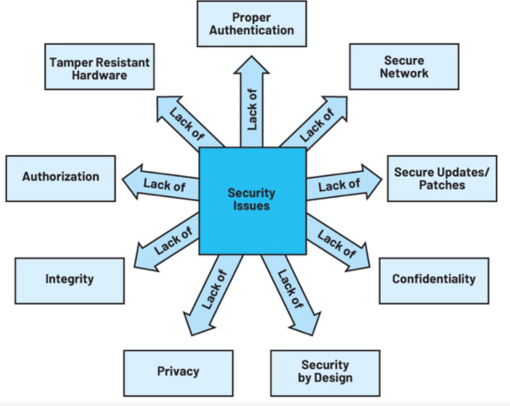
Source: Industrial Ethernet
CYBERSECURITY "BACKDOORS"
Vulnerabilities in robot software allow unauthorized access. This can include attackers being able to view live camera feeds and track a robot’s location, giving them the ability to gain full control. Robots connected to the internet have potential "doors" for attacks that can be integrated across domains such as agriculture, medicine, industrial, military, police, and logistics. This affects the export of robots in trade, and countries sometimes install their own backbone chips to imported robots to mitigate backdoor access. Robotic systems must be designed to address the cybersecurity CIA triad (confidentiality, integrity, availability) so that vulnerabilities, threats, and attacks are covered.
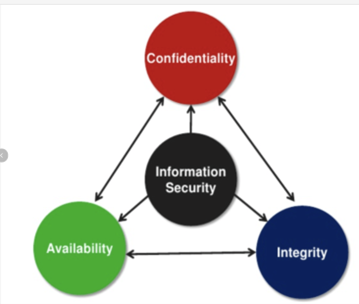
Source:ResearchGate
ROBOT SYSTEM VULNERABILITIES
The weak points in robotic systems can be exploited and need to be mitigated.
| Vulnerability | Description | CIA |
| Authentication and unauthorised access | Malicious third-party attacks, such as social engineering and phishing, requiring strong robot biometrics and multi-factor authentication (MFA). | CA |
| Network vulnerability | Open to wireless communication/connection attacks, such as man-in-the-middle, eavesdrop, sniffing, and spoofing. | A |
| Platform vulnerability | Lack of regular software/firmware security patch updates, plus configuration and database vulnerabilities. | IA |
| Application vulnerability | No testing, code review, or new security measures affecting performance of robotic systems/devices. | A |
| Confidentiality | Weak encryption algorithms leading to the interception and exposure of robotic sensitive data and design plans. | CI |
| Misconfiguration | Rendering ROS incapable of performing intended tasks at the required accuracy level, endangering humans. | A |
| Tamper-resistant hardware | Exploiting robot hardware, damage, or destruction, leading to loss of robot operational capabilities. | IA |
| Safety designs | Threat for humans, including casualties and fatalities, plus economic/financial losses. | CIA |
| Security by design | Prevent intrusion into the robotic architecture for attacks such as malicious data injection from the design standpoint. | IA |
| Penetration testing | Lack of testing can lead to security breaches of applications. | A |
| Human error | Personnel training working in robotic domains to prevent cyberattack targeting. | CIA |
ROBOT THREAT SOURCES
Insiders can cause physical damage and destruction to robotic systems. Outsiders can gain access to a robotic system through the internet. The external adversary’s goal is to gain access to information for malicious purposes, cause system malfunction, or disrupt the system’s services by injecting fake malicious data or leaking confidential documents.
| Threat | Description | CIA |
| Wireless jamming | An attack on robotic communications that interrupts connections, causing loss of robot control. | A |
| Scanning attacks | Attacks that search for vulnerabilities or gaps in robotic systems. | C |
| Data and operational integrity | Active traffic analysis such as man/meet-in-the-middle, snooping, spoofing, data tampering, malicious malware injection, false data injection, compromise of robotic devices, denial-of-service attacks, and back doors. | I |
| Availability | Service-data theft, service denial/disruption, network communication interruption, and Trojan horse physical damage attacks to equipment such as routers/switches, with wireless attacks such as wormhole/sinkhole. | A |
| Supply chain disruption | Disruption of automated supply chain systems leading to financial losses and business interruption. | IA |
| Natural catastrophe threats | Earthquakes, wildfire, and flooding, halting the operational services of robotic systems and leading to financial/data losses related to the damage/destruction of robotic equipment. | IA |
| Battery constraints | Robotic batteries that consume excessive power, drain quickly, present potential fire risks, and have a short lifespan. | A |
| Provenance | Track/trace issues in locating robotic transits/deliveries, supply chain poisoning, and performance reduction. | A |
| Tracking and monitoring | Covert tracking of robotic operators through cloud-connected devices that gather information from robots in the field. | CI |
| Sabotage and espionage | Robotic systems sabotaged by hijacking, destroying their ability to properly perform their intended task(s). | A |
| Fake applications | Third-party rendering of fake applications which contain malware such as trojans, ransomware, backdoor, spyware, botnet, or worm. | CA |
| Insecure backup | Lack of proper data storage, leading to data loss. | I |
| Deepfake threat | Maliciously modified images to deceive robot AI systems, preventing them from accurately distinguishing visual inputs and reducing task accuracy. | I |
ATTACKS ON ROBOT HARDWARE
Hardware attacks on robots can enable backdoor installation, allowing attackers to obtain unauthorized access during use or maintenance. Robots are prone to implementation attacks, such as side-channel attacks or fault attacks, that can lead to sensitive data loss or system exploitation. To prevent such attacks, tamper-resistant hardware must be installed.
| Attacks | Description | CIA |
| Robotic operating system (ROS) | ROS updates are delivered via internet connections, making the system vulnerable to distributed denial-of-service and other cyberattacks. | A |
| Worm malware | Malware that exploits network vulnerabilities and connected devices, then self-replicates to infect and compromise industrial control systems. | A |
| Cryptoware | Ransomware that encrypts robotic system data and backups, blocking access until a cryptocurrency payment is made. | IA |
| Random Access Trojan (RAT) | RATs bypass security defences to gain unauthorized access to robotic systems. | CI |
| Replay | Attackers capture and replay previously transmitted messages between the robot and operator to disrupt communication. | A |
| Masquerading fake robot control | Attackers impersonate a legitimate robot to broadcast commands that manipulate other robots and disrupt operations. | AI |
| Man in the middle (MIMA) attack | Attackers intercept and alter communication between two robots to gain unauthorized control. | CI |
| Meet in the middle (MITM) attack | Attackers break encrypted robotic communications and enable eavesdropping. | CI |
| Identity theft | Attackers steal a robot’s identity to track its location and access sensitive system information. | CI |
| Message tampering | Attackers tamper with or forge messages to compromise integrity and alter robot event logs. | I |
| Illusion | Compromised robots transmit false data across the network that misleads the robot controller’s decisions. | I |
ROBOTIC SECURITY SOLUTIONS AND MITIGATION
Several solutions are available for robotic end-users to create their cybersecurity playbook and transfer risk through insurance.
| Robotic Security Solutions | Description |
| Cyber threat intelligence(CTI) | CTI analyses robotic system threats, enabling early detection, predictive incident response, and AI-driven monitoring based on advanced persistent threat (APT) concepts. |
| Intrusion detection system (IDS) | An AI-based solution that detects anomalies, behaviours, and patterns of malware. |
| Active response | Continuous monitoring with IDS and antivirus tools to detect threats and trigger alerts. |
| Identification and verification of robots | Robot identification and verification use biometric authentication methods—such as facial recognition, fingerprints, eye scans, voice, hand geometry, and signatures—to prevent unauthorized access. |
| Cryptography protocols | Authenticate users and devices using hashing functions and encryption algorithms. |
| Keyless signatures/Byzantine fault tolerance/Tamper-resistant hardware | Blockchain-based authentication uses decentralized keyless signatures and Byzantine fault tolerance to verify robot data integrity and authenticate commands, while tamper-resistant hardware protects IoT and autonomous systems. |
| Honeypots | Simulated systems designed to attract attackers and monitor their activities for security analysis. |
| Qualitative risk assessments in robotic fields | Qualitative risk assessments are used to secure robotic platforms and communications by applying a threat, risk, and vulnerability analysis (TVRA) and ISO 31000 standards to evaluate likelihood, impact, and safety hazards in robotic systems. |
| Kill switches | Real-time emergency stop mechanisms designed to immediately deactivate, pause, or shut down autonomous systems to prevent physical damage, injuries, or malfunctioning. They are crucial for ensuring human safety, with regulations emphasizing their necessity in AI-driven machines and autonomous vehicles. A self-destructive chip needs to be implemented in each robot. |
| External scanning | Quantifies cyber risk in robotic systems by detecting and analysing vulnerabilities in networked devices without requiring internal system access. |
| Self-healing | Robots detect, isolate, and recover from attacks to restore normal operation. |
ROBOTS AND AGENTIC AI
Agentic AI is transforming robotics by enabling machines to perceive, reason, and act independently without constant human input, shifting capabilities from scripted automation to adaptive intelligence through AI-driven software agents. Collaborative efforts create a unified ecosystem of simulation environments, digital twins, and physical robot platforms. While generative AI creates new content, agentic AI empowers robotics with autonomy and adaptability.
Autonomous vehicle manufacturing leaders are utilizing agentic frameworks to drive simulation and prototype design, where robots optimize integrity, efficiency, and self-improvement through autonomous learning cycles. Within warehousing and logistics, predictive models and self-monitoring diagnostics dynamically reconfigure and modify cargo distribution strategies and self-initiate maintenance checks. Agentic AI is not only about efficiency; it is about autonomously evaluating multiple possible outcomes and improving decisions over time.
ROBOT TOKENISATION
The intersection of robots and tokens is an emerging field that uses AI tokens for robot control and blockchain-based economic tokens to incentivize, secure, and manage robotic swarms. Camera inputs and robot motion trajectories are converted into tokens, allowing LLMs to perform imitation learning, where a robot learns to mimic human tasks by processing these visual and action-based tokens.
In robot swarms, tokens serve as a decentralized mechanism to manage traffic, security, and coordination, while also enabling fault tolerance by using blockchain tokens to identify and neutralize faulty or Byzantine robots. A faulty robot will run out of tokens and can no longer influence the swarm's operations.
Tokenized processes can help safeguard robotic systems from cyberattacks by isolating sensitive operations. In a smart factory, tokenization can ensure that only authorized personnel can access specific robotic functions, preventing unauthorized manipulation.
Tokenization and robotics are key drivers of operational efficiency and reduce the complexity of handling sensitive information, enabling streamlined workflows. Healthcare providers, for example, can use tokenization to share patient data across departments without compromising privacy.
REGULATING ROBOTICS
Robotics regulation could slow down the exponential growth of emerging technologies. AI faces regulatory headwinds as it becomes integrated into physical hardware, at a time when autonomous robots are supporting productivity increases at scale across industrial sectors.
With investment driving growth, the regulatory landscape is grappling with complex legislation. As the European Union overhauls regulations and the U.S. removes some rules to remain competitive, businesses in some nations face compliance obligations across overlapping regulatory regimes. Complying with evolving legal requirements while developing AI-embodied robots presents a manufacturing challenge.
In late 2025, China’s Cyberspace Administration[lix] set out regulatory principles for humanoid robots. The regulation establishes security standards to guard against hacking and imposes guardrails on the human–machine interface to prevent commercial misuse. Robots will be required to inform users when they are interacting with AI and to continuously assess levels of user dependency.
The EU Machinery Directive 2006[lx] established baseline safety requirements for industrial products, prioritising physical guardrails like emergency stop mechanisms and kill switches. However, it was not drafted to account for physical AI, so surgical or warehouse robots can fall beyond the directive's scope.
From January 2027, Regulation 2023/1230[lxi] will replace the EU Machinery Directive and introduce three pivotal requirements for robotics manufacturing: autonomy thresholds, lifetime cybersecurity responsibilities, and collaborative risk mapping. Autonomy thresholds mean machines must demonstrate safety proofs and be assessed for "self-evolving behaviour through experience." Lifetime cybersecurity measures require network-connected robots to demonstrate resilience against both physical tampering and digital intrusions throughout their lifecycle, including post-sale software updates. Collaborative risk mapping will also be required for robots that share workspaces with humans.
The EU's new Product Liability Directive[lxii] increases potential civil liability for autonomous robotics. AI systems thought to have caused harm can be presumed defective unless manufacturers can prove that the system’s behaviour was safe or unrelated to the harm.
Members of a supply chain for a robotic or AI system may also share responsibility for defects, meaning liability can sit with multiple parties involved. For supply chain management, suppliers and vendors may need to maintain "explainability repositories" for black-box AI components and provide real-time update notifications.
Governments do not require companies to carry AI liability insurance. Regulators can mandate third party insurance for autonomous vehicle operators or healthcare devices. The EU AI Act[lxiii] focusses on compliance and leaves liability under existing tort laws.
CONCLUSION
The global robotics market has transitioned from experimental pilot programs to critical operational infrastructure, driven by the convergence of physical AI and industrial necessity.
AI has now come full cycle and is becoming pervasive in humanoid robots through a combination of AI subsystems, including machine learning, deep learning, generative AI, causal AI, agentic AI, and reinforcement learning, resulting in physical AI. This is bringing significant benefits to the logistics, manufacturing, and healthcare industries while helping address labour shortages.
Conversely, it has generated a wave of concern about potential job losses, reviving interest in concepts such as UBI, as new alternatives and solutions are explored. At the same time, the world is increasingly engaged in the development of sovereign AI, where exponential technologies take on national strategic importance. This trend involves significant energy and water resources and the rapid expansion of new data centres needed to fuel AI growth.
Robots, IOT devices, and autonomous vehicles are increasingly moving beyond centralized data centres and into job sites, where they can interact in real time without internet dependency.
Robotic density today is just a fraction of where generalized robotics can extend. According to ARK Investments, generalizable robotics could become a $24 trillion industry by 2030, creating many new jobs.
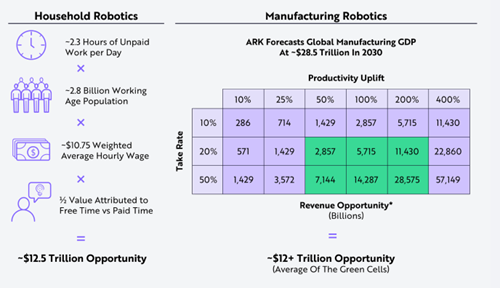
Quantum computing is expected to move out of research labs within the next five years and could increase computing power exponentially. An industrialization inflection point worth trillions of dollars is approaching, launching full-chain solutions that combine chips, hardware, AI, and software services, with high barriers to entry.
This shift could introduce quantum-powered robots, initially delivered as a cloud-based service, since quantum machines will be too large and complex—with extensive cooling requirements—to be deployed directly within most companies.
However, quantum sensors are likely to exist at the edge and could participate in causal chamber modelling to improve robotic intelligence. These systems would work in conjunction with quantum co-processors[lxiv] operating alongside existing GPU, TPU, and CPU architectures.[lxv]
When combined with the rise of sovereign AI, hyperscalers and major technology companies are likely to be the primary financial beneficiaries. These firms may need to engage in public-private partnerships to help address potential social impacts resulting from increased automation.
The risks posed by humanoid robots are complex and include a broad range of cybersecurity threats. As robots become deeply integrated into human society, traditional insurance models may not fully cover the emerging risks arising from their autonomous decision-making capabilities. Insuring humanoid robots therefore extends far beyond covering damage to a single machine; it involves building the foundational risk infrastructure for entire robotic swarms, potentially linking AI with blockchain technology.
Robotic systems are increasingly being deployed in domains that form part of critical infrastructures. These robots must be protected against potential attacks and industrial espionage.
This paper has summarised the vulnerabilities, threats, and attack vectors that may arise, along with possible mitigation strategies. Many of these protections must be addressed at the OEM level through secure-by-design approaches, as it is difficult to retrofit cybersecurity into robotic systems after deployment. Blockchain technologies and embedded insurance may become cornerstone elements in the design of both ROS-based systems and humanoid robots.
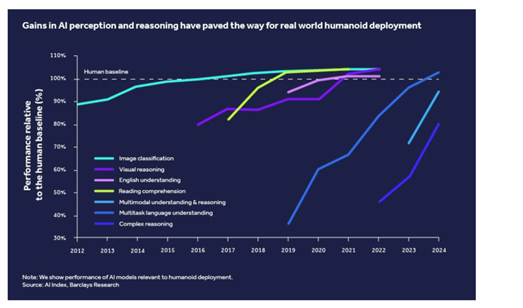
As the chart below illustrates, technology-based reasoning has already surpassed the human baseline in certain areas. In this evolving relationship, machines increasingly perform the heavy computational and operational tasks, while humans remain the in the loop as curators and overseers.
Robotics will continue to improve, and within a short period we are likely to see the emergence of pneumatic artificial muscle (PAM) technology[lxvi] within soft robotics, brain-computer interfaces, and new solid-state battery technologies that could increase battery life by up to three times.
Human oversight and collaborative working will remain essential, alongside the proper use of kill-switch mechanisms in the event of catastrophic system failures or zero-day cyberattacks.
Regulation and cybersecurity will be two key performance indicators that could slow the pace of automation. As a result, significant attention must be placed on security, safety, and compliance.
[i] https://qz.com/ai-next-wave-robots-nvidia-jensen-huang-blackwell-rubin-1851515953
[ii] https://thereader.mitpress.mit.edu/origin-word-robot-rur/
[iii] https://www.hansonrobotics.com/sophia/
[iv] https://www.goldmansachs.com/insights/articles/the-global-market-for-robots-could-reach-38-billion-by-2035
[v] https://thehumanoid.ai/
[vi] https://www.baytify.com/why-baytify/property-news/dubai-to-launch-world-s-first-flying-taxis-by-2026/?gad_source=1&gad_campaignid=23563097902&gbraid=0AAAAApywicwsfb1UmMJEMfCJc-CMmYOMe&gclid=CjwKCAiAzOXMBhASEiwAe14SafIsq2vHgeEOGc7XBWIRh9CM9PvNPtplDsit8XIhkCIhkxMfM0kHpRoCp3AQAvD_BwE
[vii] https://en.wikipedia.org/wiki/Turing_machine
[viii] https://www.robominds.de/start-en
[ix] https://www.nvidia.com/en-eu/glossary/embodied-ai/
[x] https://www.deloitte.com/us/en/insights.html
[xi] https://en.wikipedia.org/wiki/Robot_fish
[xii] https://ifr.org/ifr-press-releases/news/position-paper-on-ai-in-robotics
[xii] https://en.wikipedia.org/wiki/Computational_linguistics
[ixv] https://causalchamber.ai/
[xv] https://www.abiresearch.com/market-research/product/7786487-commercial-and-industrial-robotics-address?hsLang=en
[xvi] https://www.abiresearch.com/blog/global-robotics-market-outlook
[xvii] https://www.astuteanalytica.com/industry-report/robotics-market
[xviii] https://finance.yahoo.com/news/robotics-market-projected-reach-us-123000827.html?guccounter=1&guce_referrer=aHR0cHM6Ly93d3cuZ29vZ2xlLmNvbS5oay8&guce_referrer_sig=AQAAABmPIRIaf87tqOAvf91-klJbK9ooXOMU-P2AO9c4VnKBPV5UPx8o9KT2bSTo6OZhvd_Z1FCV6_vzsVhi5YesOjCTU4OlOZwPP8ssnJNB57JyzZxFQRZej1k8wgoKRteLvJPJGDo7TAeFRCkRgcqUaRkc9GyxtsV7qVkssNbZ8bzu
[xix] https://ifr.org/ifr-press-releases/news/global-robot-demand-in-factories-doubles-over-10-years
[xx] https://www.abiresearch.com/blog/global-robotics-market-outlook
[xxi] https://www.astuteanalytica.com/industry-report/robotics-market
[xxii] https://finance.yahoo.com/news/robotics-market-worth-over-us-124000782.html
[xiii] https://ifr.org/ifr-press-releases/news/global-robot-demand-in-factories-doubles-over-10-years
[xxiv] https://www.fortunebusinessinsights.com/china-artificial-intelligence-market-113974
[xxv] https://www.sphericalinsights.com/reports/china-humanoid-robot-market
[xxvi] https://www.chinadailyhk.com/hk/article/610427
[xxvii] https://www.pawpaw.cn/en/news/article/2025-06-30-stanford-university-releases-the-ai-index-report-2025-key-takeaways-for-businesses/
[xxviii] https://hai.stanford.edu/ai-index/2025-ai-index-report/economy
[xxix] https://digichina.stanford.edu/work/full-translation-chinas-new-generation-artificial-intelligence-development-plan-2017/
[xxx] https://www.chinadailyhk.com/hk/article/625288
[xxxi] https://www.cognitivemarketresearch.com/ai-in-insurance-market-report?campaign_source=google_ads&campaign_name=Pravin_Global_Website_Traffic_Search_All_Reports&gad_source=1&gad_campaignid=23197454060&gbraid=0AAAAApeEsMIz4nU4bQf6fLgET4nCNG98E&gclid=Cj0KCQiAhtvMBhDBARIsAL26pjFMUpoos0jddEIRrzFPHEPlZndtXBvhG0DfRPrukfOHUTD8XpjwIPsaAnAUEALw_wcB
[xxxii] https://bostondynamics.com/products/spot/
[xxxiii] https://dbr.donga.com/kfocus/view/en/article_no/406
[xxxiv] https://www.bps-lts.com/resources/post/key-warehouse-automation-trends-in-2026-ushering-in-a-new-era-of-smart-logistics
[xxxv] https://www.cargonet.com/news-and-events/cargonet-in-the-media/2025-q3-theft-trends/
[xxxvi] https://www.sdcexec.com/software-technology/robotics/article/22944804/asylon-robotics-how-robotics-and-ai-protect-cargo-at-ports-and-warehouses
[xxxvii] https://www.mckinsey.com/mhi/our-insights/heartbeat-of-health-reimagining-the-healthcare-workforce-of-the-future
[xxxviii] https://www.sciencedirect.com/science/article/pii/S0161642023006772
[xxxix] https://news.crunchbase.com/robotics/ai-funding-high-figure-raise-data/?utm_source=cb_daily&utm_medium=email&utm_campaign=20230703
[xl] https://finance.yahoo.com/news/dexterous-hands-market-size-reach-160200802.html
[xli] https://www.biopharmatrend.com/post/598-7-companies-helping-exclude-animals-from-drug-discovery-research/
[xlii] https://www.intuitive.com/en-us/products-and-services/da-vinci
[xliii] https://www.youtube.com/watch?v=ksq-yYrwkSM
[xliv] https://www.jogs.org/article/S1091-255X%2824%2900492-X/fulltext
[xlv] https://www.innovationnewsnetwork.com/swarm-robotics-and-automation-many-small-bots-big-impact/62870/
[xlvi] https://waymo.com/
[xlvii] https://finance.yahoo.com/news/baidu-robotaxis-draw-complaints-human-093000304.html
[xlviii] https://www.tesla.com/robotaxi
[xlix] https://www.precedenceresearch.com/robotaxi-market
[l] https://en.wikipedia.org/wiki/Universal_basic_income
[li] https://en.wikipedia.org/wiki/Robot_tax
[lii] https://basicincome.stanford.edu/experiments-map/
[liii] https://www.theguardian.com/world/2015/jul/02/robot-kills-worker-at-volkswagen-plant-in-germany
[liv] https://www.bbc.com/news/world-asia-67354709
[lv] https://www.independent.co.uk/news/world/asia/worker-killed-by-robot-in-welding-accident-at-car-parts-factory-in-india-10453887.html
[lvi] https://www.theguardian.com/sport/2022/jul/24/chess-robot-grabs-and-breaks-finger-of-seven-year-old-opponent-moscow
[lvii] https://finance.yahoo.com/news/former-factory-worker-sues-tesla-123200712.html
[lviii] https://www.bbc.com/news/technology-36793790
[lvxix] https://en.wikipedia.org/wiki/Cyberspace_Administration_of_China
[lx] https://en.wikipedia.org/wiki/Machinery_Directive
[lxi] https://eur-lex.europa.eu/eli/reg/2023/1230/oj/eng
[lxii] https://www.taylorwessing.com/en/insights-and-events/insights/2025/01/di-new-product-liability-directive
[lxiii] https://www.europarl.europa.eu/topics/en/article/20230601STO93804/eu-ai-act-first-regulation-on-artificial-intelligence
[lxiv] https://en.wikipedia.org/wiki/List_of_quantum_processors
[lxv] https://www.databasemart.com/blog/cpu-gpu-tpu
[lxvi] https://taylorandfrancis.com/knowledge/Engineering_and_technology/Systems_%26_control_engineering/Pneumatic_artificial_muscles/
4.2026