
The Hong Kong Protection Gap: Dimensions, Drivers and Solution
Ivan Wan, Head of Corporate Actuarial, HSBC Life (International) Limited
Abstract
Apparently, Hong Kong is one of the most insured cities in the world. New business premiums are quickly growing and reached an historical high in 2025, contributing a significant proportion to the economy’s GDP. If one only looks at these headline statistics, people might simply jump into conclusion that Hong Kong residents are exceptionally well-protected.
However, such a conclusion doesn’t hold up once looking closer to what risks people are facing, and what insurance they own. The fact is, many households are not adequately protected when the breadwinner dies; and many people are not on track to fund their long-term retirement. The Insurance Authority estimates that the mortality projection gap at about HK$7 trillion – roughly HK$2 million per working adult. At the same time, 72% of market research respondents say their retirement savings are not insufficient, with an average shortfall of HK$2.6 million.
This paper examines why both gaps can exist in a market with such high insurance penetration. On the face of it, a significant portion of the premium flows into wealth accumulation products rather than risk protection or retirement income. But when going deeper, it is fundamentally related to trust gaps, product complexity and agency bias. Closing these gaps will take a structural change from policymaker and private sector, using technology to make the shortfall visible and easy to act on, and offering simple, flexible products with low friction.
Introduction
If one wants to understand Hong Kong’s financial system, they will quickly run into an odd contradiction.
On one hand, Hong Kong stands out globally in insurance penetration. Swiss Re benchmarks indicate that Hong Kong’s gross written premiums are approaching 20% of GDP with life insurance representing the majority at 16%. Compared with Western economies, such as the United States, life insurance penetration is at 5% of GDP only (see table 1).
The momentum has not slowed – Insurance Authority (IA) statistics show new business premiums hit a record high in 2025, growing by more than 30% per annum in the post-Covid period.
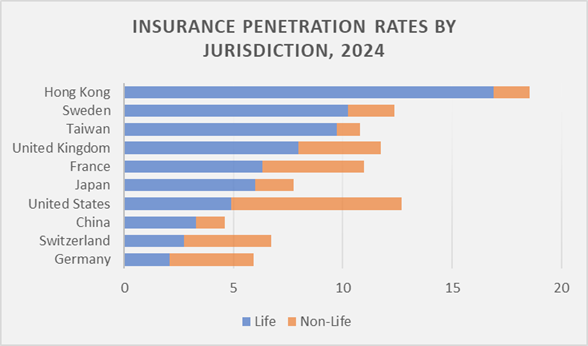
Table 1: Insurance penetration, by Swiss Re Institute
Of course, the figures don’t always tell the full story.Lower penetration can, sometimes, reflect strong public welfare, funded through high taxation. Even so, Hong Kong clearly ranks among the highest on this measure.
However, a more practical test of protection should be if something goes wrong, can a family still endure financially? Hong Kong looks far more exposed than those headline numbers suggest.
The IA estimates the city’s mortality protection gap at around HK$7 trillion – representing the shortfall between (a) what families will need to maintain their living standard if the main earner dies; and (b) what they have from savings and insurance coverage. The total gap translates into an average shortfall of HK$2 million per working adult.
Nevertheless, a second protection gap is also widening - retirement adequacy. The AIA Desired Retirement Tracker shows that 72% of Hong Kong respondents do not have enough retirement savings, with the average shortfall of around HK$2.6 million.
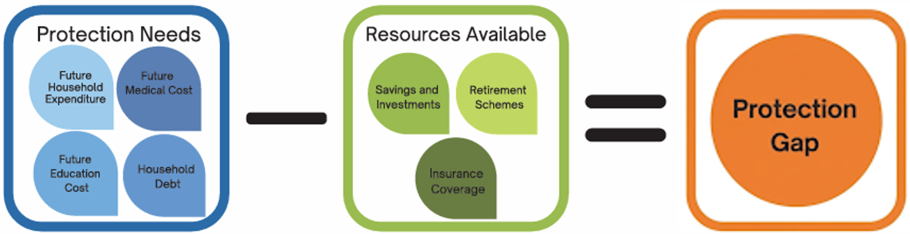
Table 2: breaking down the protection gap, by Hong Kong Insurance Authority
This creates a paradox. Hong Kong spends heavily on life insurance, yet many families remain exposed to two basis risks:
unexpected early death and living for too long, often alongside rising healthcare costs.
It is arguable that our insurance strength is overstated because of where the premium dollars go. Much of the volume is driven by high-premium savings and wealth accumulation policies. While these can be useful financial tools, they do not provide necessary risk leverage for families. New premiums have climbed, but dedicated protection and retirement products such as the Voluntary Health Insurance Scheme (VHIS) and Qualifying Deferred Annuity Policies (QDAP), have been largely stationary.
The following sections will explore the underlying drivers to the gap, from the perspective of macroeconomic, customer behavior and insurance industry.
Where the demand grows – inflated protection needs
The scale of Hong Kong’s protection gap is not solely because of people being under-insured. It is shaped by the structural features of the economy – especially high housing costs, demographic shifts and gaps in retirement design, all of which mean people need more protection.
Housing loan leverage and concentration
Hong Kong has been one of the least affordable housing markets in the world. For most families, buying a home is one of the biggest financial decisions, requiring them to take on long-term financial burden with a mortgage that can last up to 30 years.
A mortgage is therefore not only a financial instrument but a commitment that assumes a stable future household income over decades. If the primary earner dies prematurely, the family will suffer from immediate cash flow shock while still carrying a long-term debt. In that situation, money is required not only for emergencies, e.g., funeral expenses, but also to maintain the mortgage repayment for years and avoid forced sale of the house.
It is noted that mortgage repayment can take up to 40% of income for an average family, particularly when interest rates are high. The absolute size of outstanding housing debt is therefore a major contributor to the overall protection gap.
Retirement gap grows as people live longer
If mortality gap is about dying too soon, the retirement gap is about living longer than expected – longevity risk.
Hong Kong consistently leads the world on life expectancy for an average lifespan of 86 years. While this is a public health achievement, it represents a financial challenge – a retirement that lasts for 20 to 30 years is becoming increasingly normal, meaning rising costs for day-to-day living and more critically long-term healthcare. The retirement gap is widening for following reasons:
A rapidly aging population
Hong Kong’s elderly dependency ratio (aged 65+ against aged 15-64) has risen sharply from 15% in early 2000s to 35% in 2025. The Census and Statistic Department projects this could reach 60% by 2050. As the demographic pyramid reverses, a shrinking working population will need to support a growing and long-living retirement population, putting pressure on families and the wider economy.
Limits in MPF design
The Mandatory Provident Fund (MPF) has structural constraints as a retirement saving instrument. The statutory minimum contribution rate is 10% (5% each from employer and employee), which is well below that of Asian peers such as Singapore’s Central Provident Fund (CPF) that requires contribution up to 37%. The HK$30,000 salary cap has not kept pace with inflation and living costs. With high management fees and historical fund under-performance, the MPF balances may not grow sufficiently, in real purchasing power terms, to support retirement needs.
Healthcare inflation and system constraint
Medical inflation, defined as healthcare costs increasing faster than economic inflation, makes the retirement gap worse. Total health expenditure in Hong Kong exceeds 7% of GDP and continues to rise sharply at 4 to 5 times the inflation rate. Ageing population and capacity constraints in the public system are key drivers. Long waiting lists push demand toward private sector, and major illnesses (e.g., cancer, cardiac surgery) can deplete retirement savings quickly without robust medical or critical illness coverage.
Why people are not buying risk protection
The protection gap is not simply about whether people buy insurance, but whether they buy the “right” insurance. The IA’s latest figures indicate that, the new business premium for protection products – such as term life, medical and critical Illness – make up only 2% of total new premium. The trend has been shrinking from 3.2% since 2020.
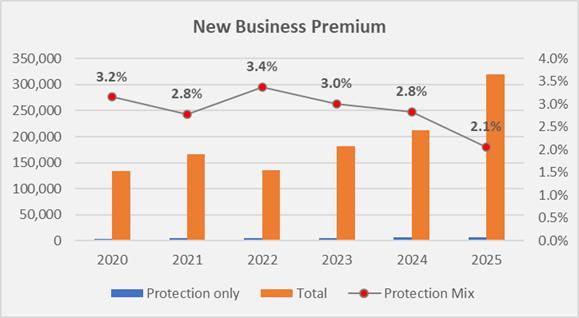
Table 3: Protection mix of new business premium in HKD million
Persistent structural gaps in Hong Kong are not driven solely by macroeconomic factors. They are reinforced by financial pressure, behavioral biases and industry-wide friction.
Financial strain drives short-term thinking
Nowadays, many working adults belong to the “sandwich generation,” supporting both elderly parents and children. With expenses such as mortgage, education, daily living costs, and occasional parent medical bills, many families face a “net-zero” budgeting problem.
Although the sandwich generation are in fact those who need insurance the most, psychologically, they often view insurance as optional with limited immediate benefit. As a result, protection and retirement planning are often “deprioritized” by other necessities, despite their important role in safeguarding families against unexpected events.
Post-pandemic economic shifts, high interest rates and inflation further push focus on short term financial priorities. The Sun Life Financial Resilience Index indicates:
- 60% of Hong Kong residents focus primarily on “managing the day-to-day budget”
- 43% prioritize building emergency funds
- 31% focus on saving for retirement, ranked only 6th
This is a typical displacement effect: rising living costs and uncertainty pulls long-term protection down the priority list. In addition, higher interest rates make liquid, low-risk investments (e.g., fixed deposits) more attractive; people are less willing to lock in money for long-term cover or retirement products.
Product design and incentive bias
Many customers dislike “pay premiums and receive nothing back” if no claims occur. Hence, insurers often promote participating products that combine saving with protection cover. These products are often marketed with attractive returns and legacy planning narratives.
Intense competition further pushes product design with strong savings features and high, non-guaranteed illustrated return. This is usually at the expense of a marginal protection benefit, particularly in early policy years.
Distribution incentives amplifythe distortion.
Agents, brokers and bancassurance compensation is largely linked to premiums, making the sales of large-ticket saving products more appealing than simple protection. This introduces a principal–agent problem that intermediaries’ incentives may not align with customer interest in maximizing risk coverage. Over time, this shapes insurance demand toward wealth accumulation and reinforces the protection gap.
Low trust in insurance
Trust issues also play a big role. In Hong Kong, the insurance industry has traditionally had a mixed reputation among the general public. This is often linked to aggressive selling, non-transparency, and information asymmetry causing friction between insurer and customer. As a result, people feel skeptical and worry about choosing the wrong products.
Commission-driven sales
Commission-based renumeration can introduce conflict of interest, especially when high commissions are paid on large-premium participating products. Customers often encounter aggressive sales tactics, such as misrepresenting returns, persistent follow-ups and emotional pressure. This leads to a perception that advisors prioritize their commission over customer needs.
Product complexity & misselling
Insurance contracts are often full of legal language. Consumers could find policy terms difficult to understand and sometimes suspect the complexity is on purpose. The lack of clarity and transparency discourage potential buyers. Historical mis-selling such as unexpected loss from complex investment-linked products have also undermined confidence. This made people more cautious about long-term commitment.
Poor post-sales experience
Trust can break down after purchase – especially during claims. For example, common disputes over non-disclosure and pre-existing conditions, “medical necessity” definition and policy exclusions. Administrative friction i.e. repeated paperwork requests, add to the worry that insurers try to deny claims. In addition, low fulfilment on the expected return leads to dissatisfaction and the impression that the insurer is not keeping the original promise.
Putting these issues together, people then end up underinsured, trying to self-fund emergencies, or buying saving products that do not provide sufficient protection.
From awareness to action – solutions to close the gaps
Breaking through the gaps needs innovation from both the regulatory and private sectors. The objective is to redesign the ecosystem and provide an “easy pathway” for insurance protection. Putting this into context, insurance and retirement should transform from complex, sales-led products into protection solutions that are accessible, transparent, affordable and rewarding.
A “one-look future” financial platform
Today, financial protection is fragmented across multiple portals – MPF accounts (recently consolidated through e-MPF) and insurance policies spread across insurers and banks. This disconnection usually creates blind spots: people cannot easily see what they own and whether their coverage is sufficient.
A “One-Look Future” digital platform could solve this invisibility.
With support from regulators and insurers, Hong Kong’s industry could build a cross-sector integrated API. e-MPF could connect directly with private insurance data to create a single gateway, where people can log in once and view their full protection and retirement position in one place – MPF balances, cash value of saving products, VHIS and QDAP coverage, and term / medical / critical illness protection policies side-by-side.
Moreover, the platform is not only a static product inventory. It should help people understand their status, estimating retirement income sufficiency and risk exposure against medical inflation or longevity stress. When gaps emerge, users receive prompts and recommendations. The key is to make under-protection visible and actionable (see table 4).
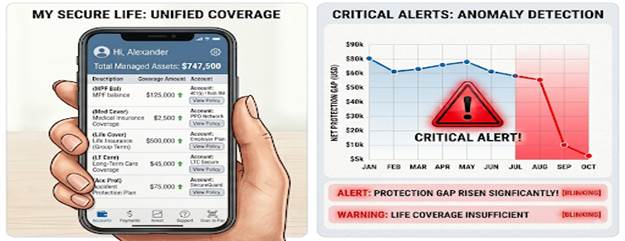
Table 4: A unified digital platform bringing all coverage into one screen, by Gemini AI generation
Policy reform: ease cashflow pressure and improve affordability
Better vision does not solve affordability. Currently, large sums remain locked inside MPF accounts while individuals struggle to pay for essential insurance.
Allowing limited use of MPF funds for protection could free up liquidity drastically.
Regulators could permit members to allocate a defined portion of their MPF balance for regulated protection products, such as VHIS and critical illness plans. The idea is that compulsory saving should not be viewed as a long-term investment tool only – it is a facility that could support both protection and retirement needs at different stages of life.
Flat growth in new premiums for QDAP and VHIS (see table 5) suggests existing tax incentives may not materially change behavior. The current tax deduction cap (HK$8,000 for VHIS / HK$60,000 for QDAP) could be raised, alongside expanding tax relief for other products. The fiscal impact is relatively modest (c.0.5% of government revenue) and affordable. This low-effort policy refinement is reasonable and practical in view of rising living costs and medical inflation.
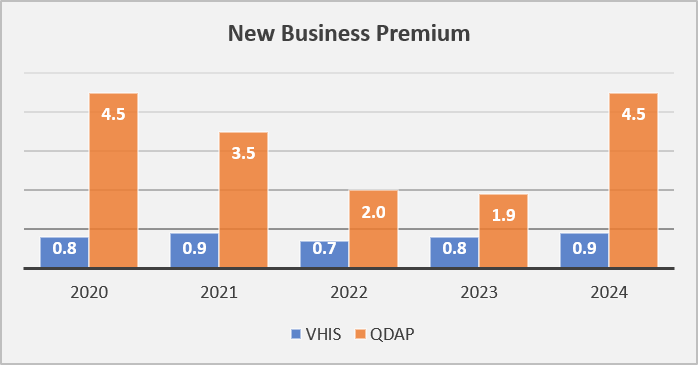
Table 5: New business premium for QDAP and VHIS in HKD billion
Rebuilding trust and confidence
Over the past few years, the Insurance Authority has raised market conduct standards through stronger product governance and enhanced disclosure requirements (e.g. fulfillment ratio on dividend). Upcoming rules such as illustration caps and commission spreading requirements are expected to further mitigate mis-selling risk and prevent unrealistic policyholders’ expectations. However, it takes more than this to regain customers’ confidence.
Promoting simple, transparent, commission-free digital products
A central information portal, similar to Singapore’s compareFIRST, could enable customers to easily compare premiums and features of similar insurance products. On-shelf “eligible” products will require fulfilling several conditions such as plain-language terms, standard disease definitions with clear exclusions, and a standard one-page disclosure for each product showing what is covered / not covered, waiting period and cancellation rules, etc. This aims to reduce distribution costs, improve transparency and comparability.
On other side, the reality is, complaint cases reached a multi-year high in 2025, mostly related to sale practices and medical claim servicing.
As for regulators, what could be done further is to extend the public disclosure requirement for claim-related information, i.e., standardized claims metrics on payout ratio, acceptance / decline rates, top decline reasons, average processing times. The disclosure aims to make the claims decision more transparent.
Moreover, to provide an incentive to resolve contested claims faster, regulators could extend an affordable fast-track mechanism below a defined threshold (currently HKD1.2 million).
Frictionless advice: AI support for underwriting and claims
Technology is the way forward, yet human advice remains equally important because insurance is a business built on trust. Current sales and claim processes sometimes feel slow and overly administrative. Using AI as “co-pilot” could reduce paperwork and speed up underwriting and servicing, freeing up advisors for planning and providing better outcomes for customers.
Faster underwriting could be supported by the use of technology and big data.
Predictive risk models can cross-reference relevant information with the industry’s centralized health and risk databases for simpler protection products such as term life, critical illness and VHIS. This helps to provide instantaneous risk assessment and underwriting decisions, shortening the underwriting process from weeks to days. Similar automation can be applied to claims processing to reduce friction.
At the same time, to support human advisors, insurers can equip advisors with internal AI copilots that work alongside them during client meetings. While the advisors lead the conversation, the tools could analyse in parallel the customer's income, asset / liability position and existing coverage, and present a clear visualisation of the customer’s protection gap. These analytics can re-shape professional brands, supporting a shift from product selling to a need-based advice perspective.
Embedded, modular protection for the gig economy
Nowadays, more people are working in the gig economy, through freelancing, contract-based projects and multi-retirement careers. Many of them are legally classified as self-employed, so traditional employer-based safety nets do not provide sufficient cover for them. As people move between short projects and platforms, they carry insurance and financial risk themselves. As a result, this working group is usually considered the most under-insured.. Income volatility also causes mismatch of fixed regular premiums with variable cashflow.
In response, insurers could offer flexible modular protection to meet customers’ needs.
Usage-based and parametric cover can replace traditional “always on” insurance policies with protection that activates only when risks are exposed. Low premium, weekly / monthly payment options with modular add-ons (e.g. accident, hospital cash etc.) to fit customers’ financial needs. This makes protection flexible and affordable on demand.
However, this only addresses short-term problems. The long-term medical and retirement protection remains a large gap to fund for the gig workforce.
China, one of world’s largest gig economies with over 300 million workers, has shown what is possible at scale. Beyond short-term medical and accident micro insurance, giant tech companies have built a broader safety net. For example, launching micro-investment funds that are tailored toworkers’ irregular income, with low deposits into retirement accounts, and collaborating with the government to pool millions of gig workers into low-cost, comprehensive health insurance solutions.
For Hong Kong to follow suit, it would require enabling rules and coordination to support for automated small contributions to retirement saving, and a scaled pooling medical scheme that brings cost down with improved medical cover.
Conclusion
The protection gap is not an issue only for Hong Kong. It’s a global challenge seen in major markets such as the US, UK and China. Governments are all facing the same questions – people are living longer, and healthcare is getting more expensive. Many households are heading toward a shortfall in protection and retirement.
Hong Kong looks to be an exception with the city’s leading position for insurance density and penetration. But when we look closer, the fact is that many families are under-insured. Cultural and behavioral habits often drive mismatch, especially when premiums tend to flow into savings-focused products. Retirement adequacy is also worsened by low MPF contribution and rising medical expenses.
To narrow the gaps, it will take more than asking people to take voluntary actions. Traditional product design and commission-led distribution have clear limits on this issue. What is needed is a structural shift – smart digital integration that makes protection needs visible and actionable, along with streamlined underwriting and claims processes to reduce conflicts. People are less resistant to insurance when trust is in place.
Implementing these successfully can turn high premium volumes into something more meaningful – stronger financial resilience for families, and a more stable and sustainable ageing society.
Disclosure – AI usage acknowledgement
Artificial Intelligent tools were used in this paper for market research, image generation, and language stylistic refinement. All data and information were independently verified and reviewed by the author.
References
- AIA Hong Kong and Macau. (2025). 72% of respondents lack sufficient retirement reserves 60% have yet to make advance preparations: AIA Desired Retirement Tracker.
https://www.aia.com.hk/content/dam/hk-wise/pdf/about-aia/about-us/media-centre/2025/aia-press-release-20251015-eng.pdf.coredownload.pdf
- Alan, P. (2024). Oh, my poor funds: A timely revisit of Hong Kong's MPF system. Impact Factors, University of Hong Kong Business School.
https://impact.hkubs.hku.hk/oh-my-poor-funds-a-timely-revisit-of-hong-kongs-mpf-system/
- Hong Kong Census and Statistic Department. (2026). Table 110-01004 : Dependency ratio and median age of population
https://www.censtatd.gov.hk/en/web_table.html?id=110-01004
- Hong Kong Insurance Authority (IA). (2021). Report on Mortality Protection Gap Study of Hong Kong. Hong Kong Special Administrative Region Government.
https://education.ia.org.hk/en/tool/report.html
- Mandatory Provident Fund Schemes Authority (MPFA). (2025). MPF Schemes Statistical Digest. HKSAR Government.
https://www.mpfa.org.hk/en/info-centre/research-reports/quarterly-reports/mpf-schemes
- Monetary Authority of Singapore (MAS). (2015). CompareFIRST and the introduction of Direct Purchase Insurance (DPI) frameworks. Government of Singapore.
https://www.mas.gov.sg/news/media-releases/2015/comparefirst-and-dpi
- Sun Life. (2025). Sun Life Asia Financial Resilience Index: Balancing today’s needs and tomorrow’s goals
https://www.sunlife.com.hk/content/dam/sunlife/regional/hong-kong/documents/financial-resilience-report-2025-hk.pdf
- Swiss Re Institute. (2024). Global insurance resilience index: Resilience tests and macro protection gaps. Swiss Re Management Ltd.
https://www.swissre.com/institute/research/topics-and-risk-dialogues/climate-and-natural-catastrophe-risk/growing-exposure/global-mortality-protection-gap.html
- World Health Organization. (2024). World Health Statistics 2024: Monitoring health for the SDGs. World Health Organization.
https://www.who.int/publications/i/item/9789240094703